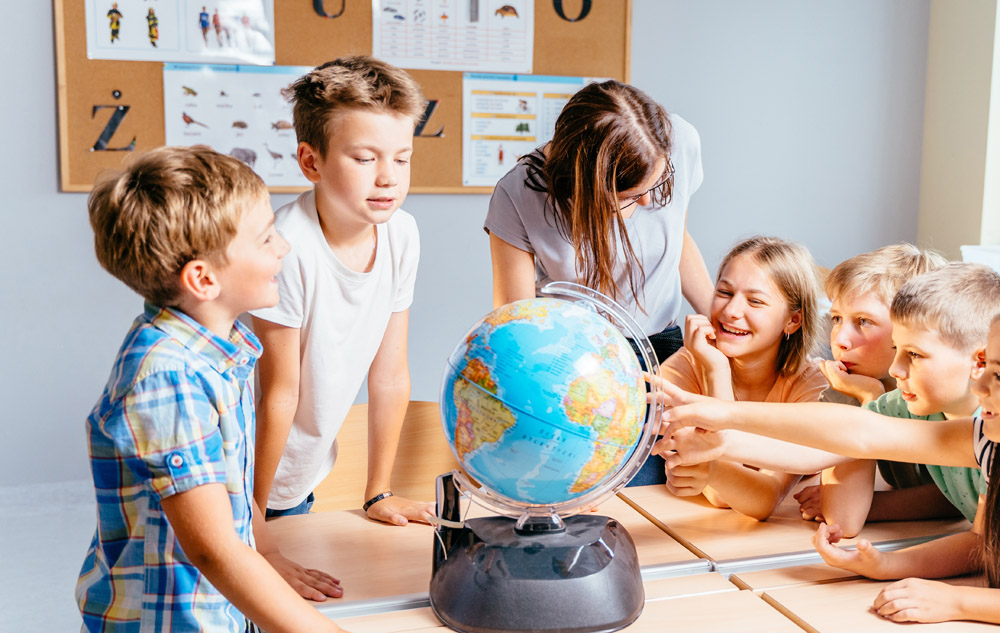
Explore our interconnected world through comprehensive study of physical geography, cultural diversity, and global economic systems. This course examines how geographic factors influence human settlement patterns, economic development, and political relationships across different regions and continents. Students analyze maps, satellite imagery, and demographic data to understand spatial relationships and environmental challenges facing various countries. The curriculum covers climate patterns, natural resources, population dynamics, and urbanization trends while emphasizing critical thinking about global issues. Cultural geography components explore religions, languages, traditions, and social structures that shape regional identities and international relationships.